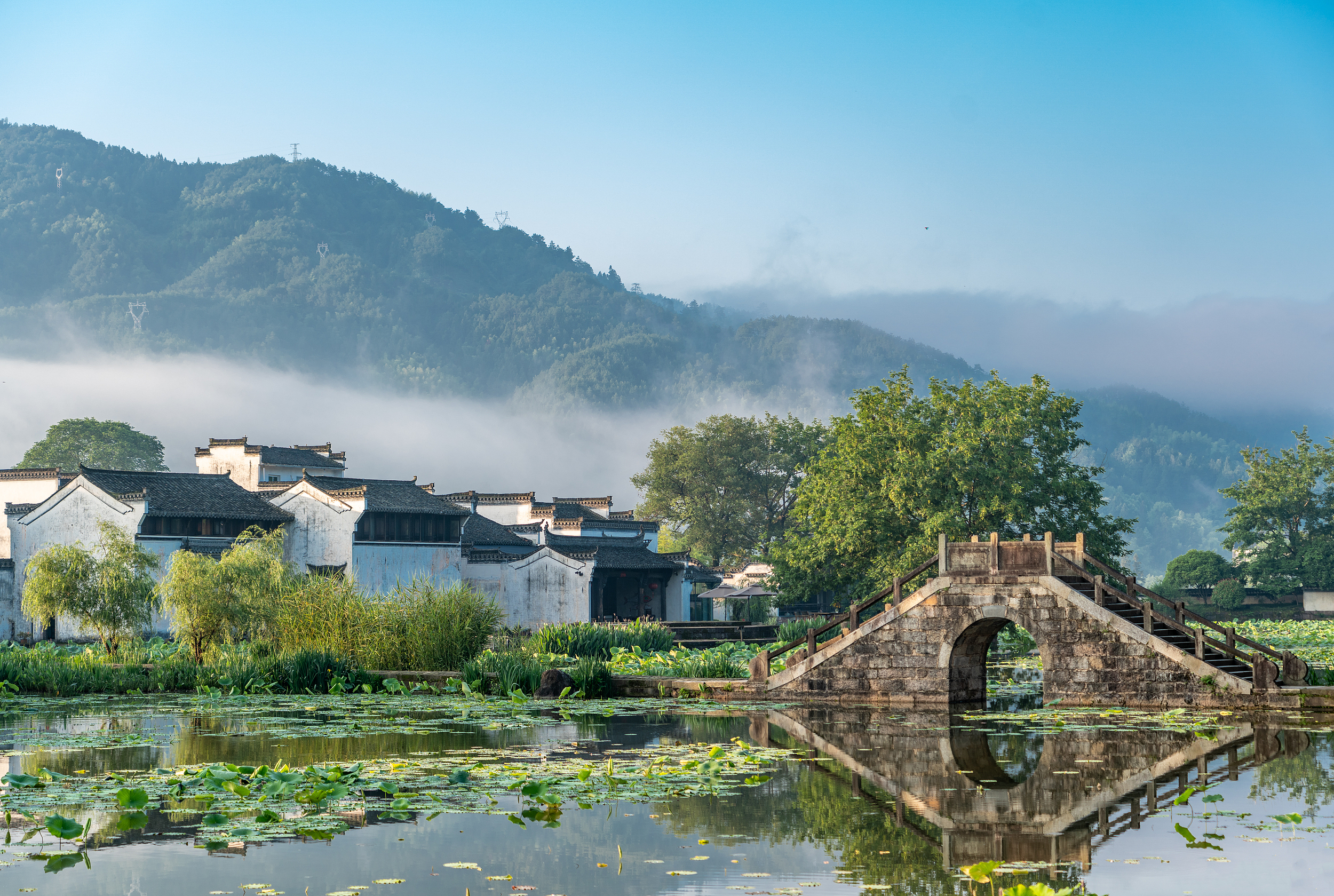
What Chengkan Is
Chengkan is one of the oldest and best-preserved feng-shui Huizhou villages, built following I Ching / Bagua (八卦) principles. It is often called:
“江南第一村” — The No.1 Village South of the Yangtze (attributed to Zhu Xi, Song Dynasty)
“徽州八卦村” — a rare, intact feng-shui layout village
One of the most “academic” Huizhou villages, with ancestral halls, clan compounds, and a historically elite family lineage
Key architectural features:
Ming/Qing residences
Ancestral halls (especially the famous Cheng Family Ancestral Hall)
Winding alleys that form the Bagua maze
Stone bridges, lakes, and rural scenery
Comparatively low commercialization vs. Hongcun/Xidi
What to See. Photography Spots
Hilltop viewpoint looking down on the Bagua layout
Yongxing Lake reflections
Narrow old alleys with Ming/Qing doors
Lantern festivals at night (when crowding is manageable)
Review Summary
Chengkan has extreme polarity in reviews.
Positive Themes
“Beautiful, authentic, atmospheric”
Very photogenic, especially with lanterns
Much less commercialized than Hongcun
Architecture highly representative of classical Huizhou culture
Great for people staying nearby (slow travel)
Friendly villages (according to some reviewers)
Scenic night lighting and fish lantern traditions (when not overcrowded)
Negative Themes
These issues are repeated across hundreds of reviews:
Management Problems
Crowded events with zero crowd control
Risk of stampedes; people falling into water
Rude, indifferent, untrained staff
Poor ticketing experience; messy gates
Overpriced Ticket (80–110 RMB) — many compare it unfavorably to Hongcun.
Poor Signage — key buildings hard to find; some closed or marked as private.
Transportation Issues
No taxis after 19:00
Buses stop early
Visitors trapped in parking lots for 1–2 hours
No shuttles during peak events
Cleanliness Issues
Sewage smell in canals
“Dirty and chaotic” repeatedly mentioned
Some villagers dump wastewater into rivers
Holiday Chaos
Traffic gridlock
2-hour parking standstills
No staff or crowd control
Unsafe crowding
TL;DR reviewer consensus: Off-season daytime = pleasant and beautiful. Peak season / holiday evenings = nightmare
Visitor Satisfaction (Overall)
~55–60% positive (beautiful, authentic, atmospheric)
~30% negative (management disasters, overpriced, chaotic)
~10–15% very negative (unsafe, scam-like, rude staff)
This is one of the most polarized tourist sites in Anhui.
Historical & Cultural Importance
Strong Points
One of the oldest, academically important Huizhou villages
Excellent example of Bagua-style settlement planning
Rich clan culture, ancestral halls, Ming-era architecture
Highly respected by Chinese architectural historians
A true living museum of Huizhou village form
Weak Points
Not UNESCO World Heritage (unlike Hongcun/Xidi)
Less recognized internationally
Poor local management reduces perceived cultural value
International Recognition / Bucket-List Status
Chengkan is not widely known internationally. Not a bucket-list destination for first-time visitors, but valuable for Huizhou architecture enthusiasts.
Should You Visit?
Visit if:
You love Huizhou architecture and Bagua planning
You prefer low-commercialization rural villages
You can go off-season (weekday, daytime)
You stay nearby and can walk in/out
You want unique photography locations
Avoid if:
You come during holidays (New Year, Golden Week, Mid-Autumn)
You expect UNESCO-level organization
You dislike potential chaos or poor sanitation
You want good value for money
How to Get There
From Huangshan North Railway Station (黄山北站)
Direct bus (45–60 min)
Taxi: 80–120 RMB
From Tunxi/Huangshan Airport
Direct bus or taxi (60–80 min)
Returning at night
Important caution:
No taxis after ~19:00
No buses
Parking lot delays of 1–2 hours
If visiting for night lantern shows: hire a private car in advance, or stay in a nearby guesthouse
Final Assessment (Grade)
Historical / Cultural Significance: A-
Visitor Satisfaction: B- → C
International Recognition: C+
Overall Experience Quality: C+
Final Grade: B- (A- off-season, D/F during holidays)
Chengkan is a beautiful, culturally important, photogenic Huizhou village with deep Bagua heritage — but also one of the most poorly managed scenic areas in the region during peak times. Off-season visits can be magical; holiday visits can be dangerous and miserable.
For most travelers: Worth it only off-season (weekday/morning). Otherwise, Hongcun/Xidi provide a more reliable experience.