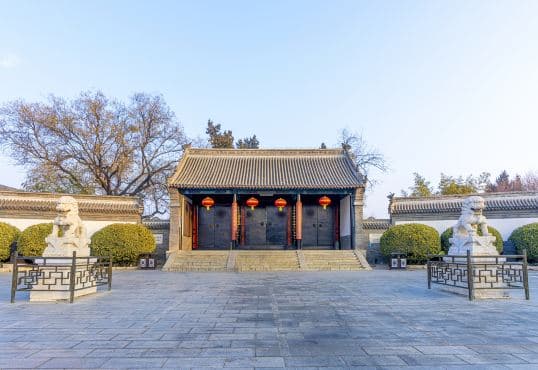
Zhili Governor-General’s Office occupies a former provincial headquarters in central Baoding, where official duties and family life unfolded within the same enclosed compound. Its governors administered the province surrounding the imperial capital; Zeng Guofan and Li Hongzhang are among the statesmen associated with the site. The main attraction is the arrangement of courtyards and rooms, which makes the hierarchy of Qing government physically understandable. It is a worthwhile stop for exploring Baoding’s history, particularly with an interest in the Qing period, although a quick photographic circuit reveals only part of the story.
Follow the central axis first, moving through the gates and ceremonial courtyard to the principal halls and then the residential quarters. Look at inscriptions, furniture arrangements and the boundaries separating official business from private life. Reconstructed interiors and figures of officials illustrate meetings, receptions and domestic scenes. These are museum presentations, so do not assume that every furnishing survives untouched from the imperial period. Visitors often find the recreated working scenes more accessible than lengthy historical panels. Opinions about the depth of the collection are mixed, making the compound itself an important part of the visit.
Next, explore the exhibition rooms beside the main courtyards. They explain the governor-general’s responsibilities, military and civil duties, and the staff who supported the administration. Reading thoroughly can easily take two to three hours, even though a brisk walk through the buildings takes about an hour. Choose a few subjects rather than trying to absorb every biography. Visitors describe interactive screens and digital presentations, but these do not make every room equally engaging. Temporary exhibitions and access to individual buildings change, so ask about the available side-courtyard route when you arrive.
Historical explanation makes a substantial difference here. Without Chinese, official titles and connections between the people represented can be difficult to follow. Foreign visitors particularly valued a Chinese-speaking companion, while older reviews describe only some English labels. Ask in advance whether a guide can provide a language you understand, how long the tour lasts and what it costs. For an independent visit, a short introduction to Qing administration and a phone translation tool are useful preparation. With school-age children, focus on the reconstructed offices and family rooms rather than expecting them to read every display.
Arrive at opening on an ordinary weekday. May holidays and early October repeatedly bring reports of entrance queues and difficult parking; a taxi or public transport avoids searching for a space immediately outside. In summer, bring water and sun protection for the courtyards, and do not rely on every room being air-conditioned. Allow two to three hours for an unhurried visit, then walk across the road to the Ancient Lotus Pond. There are plenty of nearby lunch options. Standard adult admission is CNY 35; check seasonal hours and the usual Monday closure before travelling.