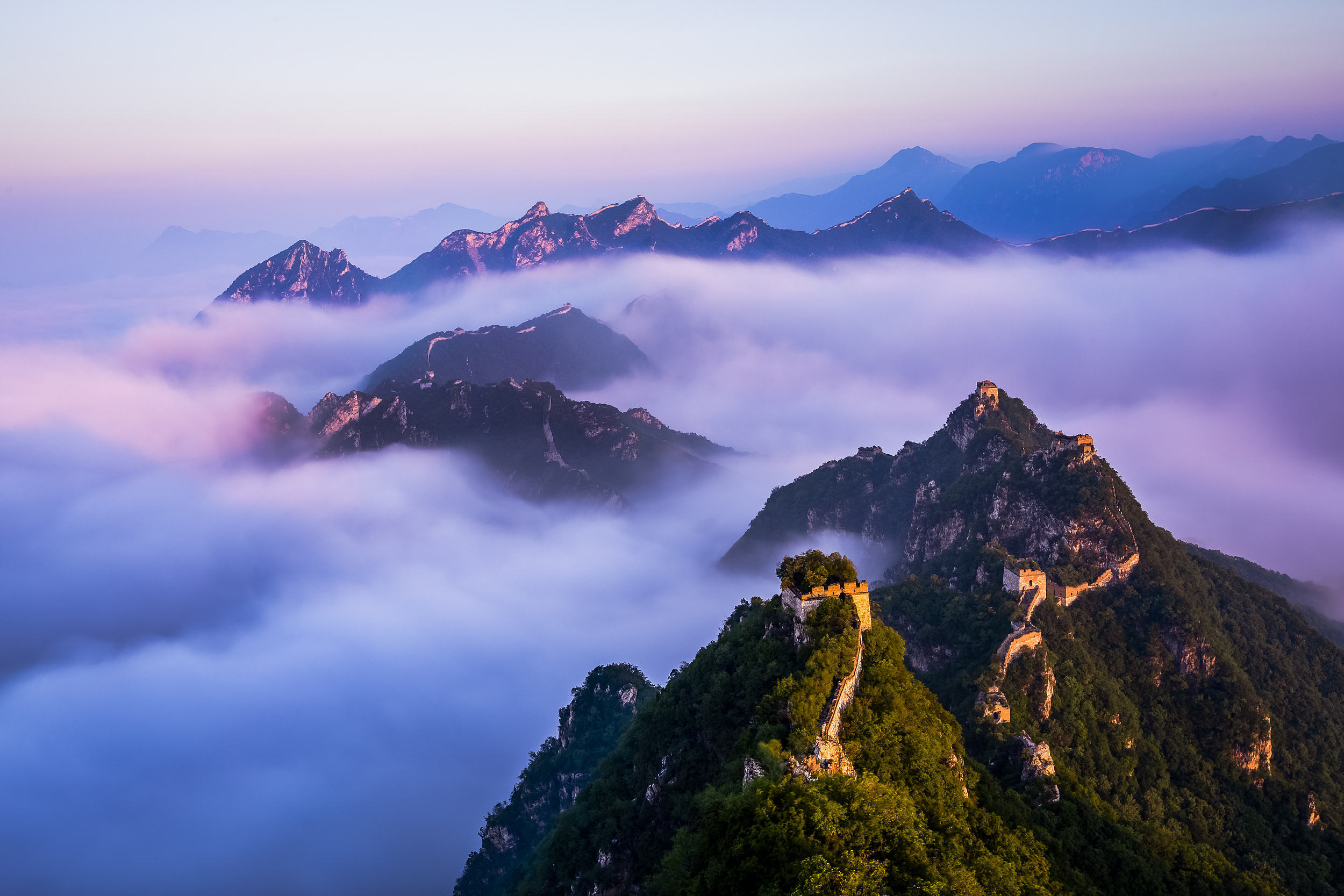
An unrepaired “wild” section of the Great Wall near Beijing tests and rewards adventurous hikers 🇨🇳
Jiankou is the Great Wall at its most raw – overgrown ruins clinging to a knife-edge ridge. Unlike the polished tourist sections at Badaling or Mutianyu, this stretch remains rugged and untouched. Travelers say it offers a truly authentic experience: the Wall snakes dramatically across untouched mountains, with crumbling watchtowers and panoramic views you won’t be sharing with bus tour crowds.
Jiankou is often called the Great Wall’s most thrilling hike in Beijing. Some travelers recount it as one of the toughest yet most awe-inspiring days of their lives – a trek where you scramble up broken stone steps using hands and feet, sweat pouring with each steep ascent, only to be awestruck whenever you glance back at the Wall zigzagging endlessly along green mountains. “It wasn’t just a hike – it was a test of endurance and spirit,” as one hiker put it.
This wild section has never been restored, so parts are crumbling and vertigo-inducing. There are no safety rails or cable cars – and officially, Jiankou is off-limits to casual tourists for safety and preservation reasons. (Signs warn that climbing here is prohibited without permission) Nonetheless, many adventurers still tackle Jiankou at their own risk, drawn by the challenge and solitude. Hikers must exercise caution on the near-vertical segments like the notorious “Sky Ladder” (stairs at a 70–80° incline) and the “Eagle Flies Upward” peak – spots so steep that, as legends say, even eagles must fly straight up to reach them.
A popular route is to hike from Jiankou to the restored Mutianyu section, about 10 km. This one-way trek (4–6 hours) lets you witness the Great Wall’s transformation from wild ruin to polished grandeur. Travelers mention that the Jiankou-Mutianyu hike is challenging but hugely rewarding, offering the best of both worlds – you start in complete wilderness and finish where facilities (and an easier exit) await. Do note that minor restoration has begun on the Jiankou end near Mutianyu, so the “wild Wall” may slowly shrink on that side.
Down in the valley, Xizhazi Village serves as the base camp for Jiankou. Here, local farmers run simple guesthouses and homestyle restaurants. After a exhausting hike, you can refuel on rustic dishes – travelers rave about the wild mushroom stews, hand-pulled noodles, and other homemade comforts waiting in the village. There’s no better feeling than enjoying a hearty farm meal while recalling the epic adventure you just undertook on the Wall.
Address: Jiankou Great Wall (箭扣长城) — Xizhazi Village
Fun fact — “Jiankou” means “Arrow Nock.” The name comes from the shape of the mountain: a curved notch in the ridge here reminded people of the notch at the end of an arrow.