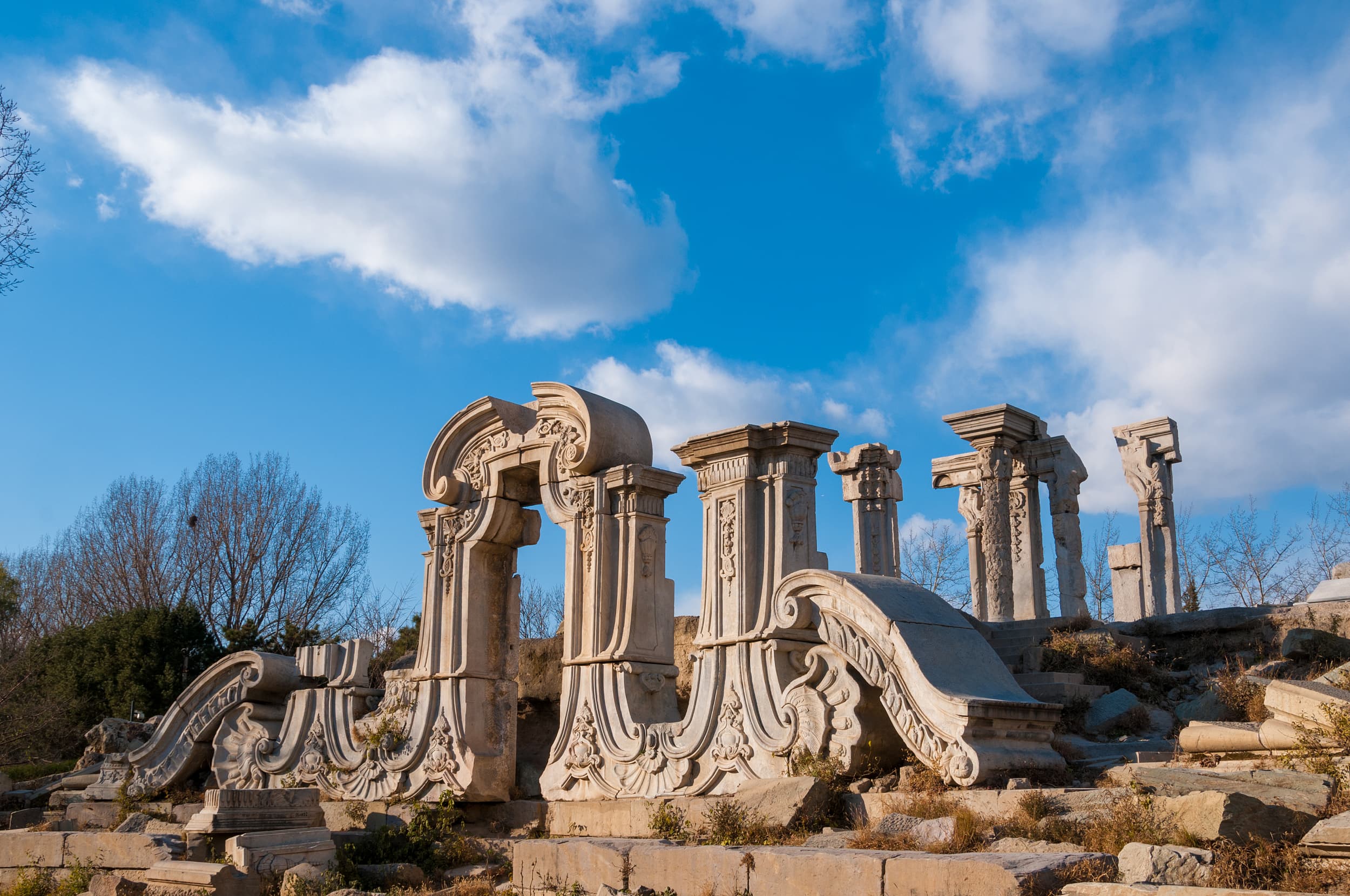
Yuanmingyuan Park, often referred to as the Old Summer Palace, is a sprawling imperial garden complex that once epitomized the grandeur of the Qing Dynasty. While largely destroyed in 1860, its extensive ruins, water features, and natural landscapes now serve as a powerful historical monument and a place of quiet contemplation. It is a significant site for understanding China's modern history and the impact of foreign intervention.
Visitors consistently praise the park for its vastness and the sense of history it evokes. Many find the ruins, particularly the Western-style buildings, to be profoundly moving, offering a glimpse into a lost era. The park's natural beauty, including its large lotus ponds (especially vibrant in summer), ancient trees, and diverse flora, is frequently highlighted. Reviewers often mention the peaceful atmosphere, making it an ideal place for a long stroll or a reflective visit. The miniature model in Changchun Garden is noted as helpful for visualizing the palace's former glory.
To make the most of your visit, plan for at least 3-5 hours, as the park is exceptionally large; some visitors suggest a full day. Wear comfortable shoes as you will be doing a lot of walking. The park is easily accessible via Subway Line 4 to Yuanmingyuan Station, Exit B, which is a short walk to the South Gate. Consider visiting in spring for cherry blossoms, summer for the lotus blooms (June to August), or autumn for vibrant foliage. Winter offers a quiet, almost desolate beauty, with opportunities for ice skating. Many recommend purchasing the combined ticket to access all areas, especially the Western-style ruins. Bringing your own water and snacks is advisable due to the park's size.
A common observation is that the park can be crowded, especially during peak seasons or holidays. To mitigate this, aim for early morning visits or weekdays. Some visitors find the sheer scale overwhelming and suggest focusing on specific areas like the Western-style ruins or the lotus ponds if time is limited. While the park is well-maintained, the historical context of the ruins can be emotionally heavy for some, so be prepared for a contemplative experience rather than a purely recreational one.