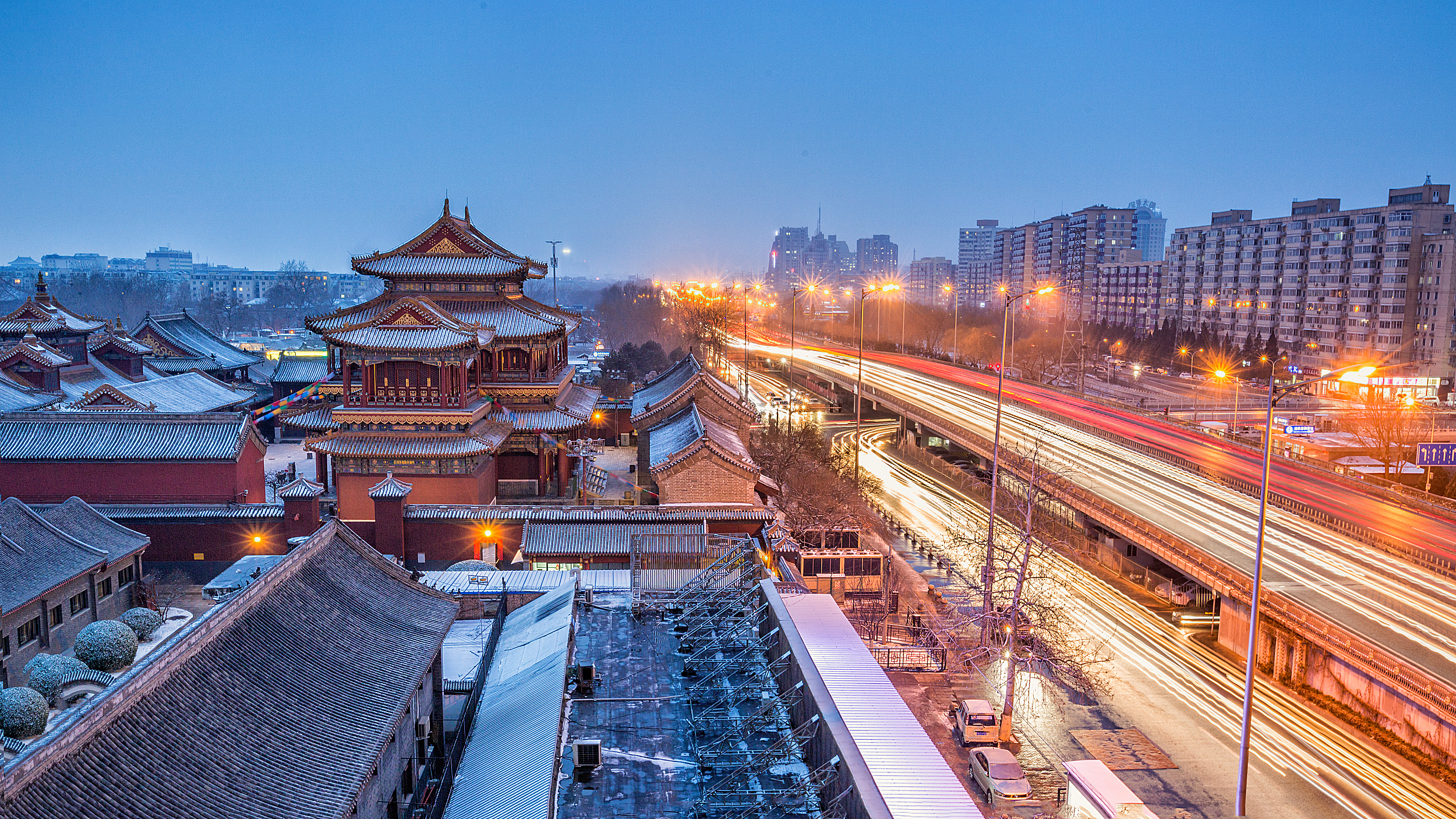
A Qing-era palace turned Tibetan Buddhist monastery 🇨🇳
Lama Temple (Yonghe Temple) in Beijing was originally built in 1694 as a prince’s palace and converted into a lamasery (monastery) in 1744. Today it is one of the largest and best-preserved Tibetan Buddhist monasteries in China. Its vast complex features five main halls with red painted walls, yellow-glazed roof tiles (a symbol of imperial status) and ornate wooden carvings combining Chinese and Tibetan motifs. Many visitors note the reverent atmosphere – incense often fills the air and monks chant in the gilded halls, reminding guests that this is still an active temple, not just a museum.
Ornate halls & giant Buddhas
The temple’s highlight is the Wanfu Pavilion (Hall of Ten-Thousand Blessings), home to a colossal white-sandalwood Maitreya Buddha about 26 meters tall – said to be the tallest wooden Buddha statue in the world. Other major sights include Yonghe Hall (with three large bronze Buddhas of past, present and future) and the Falun Hall’s multi-tiered Arhat Hill, featuring 500 carved arhats in relief. Travellers frequently mention these attractions. One reviewer calls it “a spectacular temple with amazing architecture,” noting especially the massive Buddha figures.
Active worship & rituals
Lama Temple remains a living monastery where pilgrims come to pray. Upon entry each visitor receives three incense sticks – which are lit in front of the shrine in each hall. Many tourists remark on the strong incense smell and the need for modest attire (hats and bare shoulders should be covered) as signs of respect. Photography of the inner statues is generally not permitted. Weekends and Chinese holidays are very busy, so one travel guide recommends visiting early or late in the day to enjoy a bit more peace.
Address: Lama Temple (雍和宮) — No. 12, Yonghegong Street
Fun fact — the temple’s name Yonghe (雍和) means “Harmony and Peace.” In 1735 the Qianlong Emperor granted the temple imperial status and covered its roofs with yellow tiles reserved for the emperor.
