Scenic views and fewer crowds: the Great Wall at Mutianyu 🇨🇳
Walking on the Great Wall of China is a bucket-list experience, and the Mutianyu section lets you do it with breathtaking mountain scenery and far fewer crowds than other popular sections near Beijing. This well-restored stretch spans about 2.25 km and includes 22 watchtowers, offering visitors a chance to explore ancient fortifications at their own pace. Many travelers prefer Mutianyu for its balance of accessibility (it’s roughly a 1.5-hour drive from downtown Beijing) and authenticity, as the wall here retains a historic charm amid lush, forested hills.
Mutianyu’s history dates back to the mid-6th century (Northern Qi dynasty), making it older than the more famous Badaling section. The current walls were rebuilt in the 1560s under the Ming dynasty, on the foundations of the original Qi-era fortifications. Mutianyu served as a crucial northern barrier defending the capital and imperial tombs. Constructed mainly from granite, the wall at Mutianyu stands 7–8 meters tall and 4–5 meters wide. Uniquely, both sides of this section have crenellated parapets (battlements), allowing defenders to fight from either side – a rare Great Wall feature. Mutianyu also boasts a high density of watchtowers: 22 towers line this relatively short segment, including an impressive three-tower fortress guarding a mountain pass.
After centuries of wear, Mutianyu was extensively restored in the 1980s to welcome sightseers as an alternative to overcrowded Badaling. The site fully opened to tourism in 1988 with improved access and facilities. Today, visitors will find a well-managed scenic area: a shuttle bus ferries guests from the main parking area to the entry gate at the foot of the hills, and well-marked paths lead up to the Wall. (The Great Wall, including Mutianyu, was inscribed as a UNESCO World Heritage Site in 1987, underscoring its global importance.)
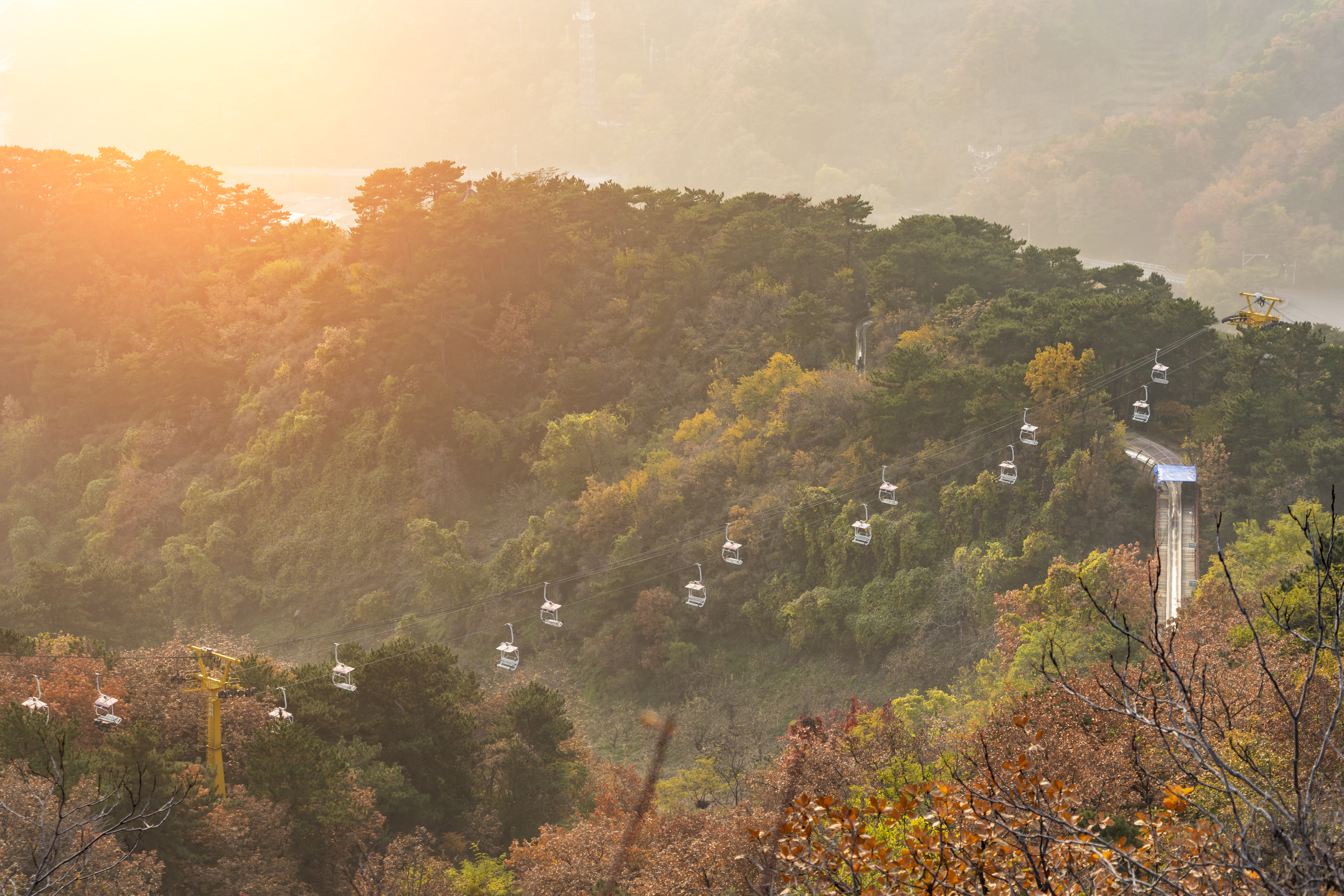
Visiting Mutianyu is both rewarding and fun. To reach the Wall itself, you can hike up a steep footpath or hop on a cable car/chairlift. The enclosed cable car carries visitors to near Watchtower 14, while an open-air chairlift goes to Watchtower 6. Once on the ramparts, you’re greeted with panoramic vistas of rolling mountains that change with the seasons – lush green in summer, bright foliage in autumn, and a magical snow-dusted scene in winter. After exploring the rampart steps and peering from the watchtowers, you have the option of an exhilarating descent: a toboggan slide winds down from Tower 6 back to the valley. This 1.6 km long metal slide (like a dry alpine coaster) lets you control your speed on a wheeled sled as you glide down the mountain – a thrilling finale that’s especially popular with kids (and the young at heart)!
Mutianyu is one of several Great Wall sections open to visitors near Beijing, alongside Badaling (the busiest, most touristy part) and Jinshanling (a farther, more rugged section). Many consider Mutianyu the best choice for its combination of epic views and manageable crowds. For an even more serene experience, visit on a weekday or early in the morning to snap photos with virtually no one else around. Amenities are visitor-friendly: there are restrooms, snack stalls, and souvenir shops near the entrance and at the cable car stations, though it’s wise to bring water and wear comfortable shoes for the Wall’s many steps. Whether you’re a history buff or a nature lover, Mutianyu delivers an unforgettable Great Wall adventure.
Address: Mutianyu Great Wall (慕田峪长城) — Mutianyu Village, Bohai Town, Huairou District
Fun fact — Mutianyu is one of the only sections where you can ride a toboggan down the Great Wall. Even former U.S. President Bill Clinton took the Mutianyu cable car during his 1998 visit to China!