Where modern China was born — the world’s largest public square 🇨🇳
Tiananmen Square is an immense open space in the heart of Beijing – not just a place to walk through, but a symbolic stage for national events. Each day at dawn, crowds gather to watch an honor guard solemnly raise the Chinese flag. This daily ritual underscores the square’s importance as the heart of the nation.
Spanning about 880 meters north-south and 500 meters east-west (roughly 440,000 m² in area), Tiananmen Square can accommodate over one million people for grand gatherings. Its layout aligns with Beijing’s central axis: along this line stand the flagpole with the national flag, the 38-meter Monument to the People’s Heroes at the center, Chairman Mao’s Memorial Hall, and the Zhengyangmen gate tower at the south end. Flanking the square on the east and west sides are the National Museum of China and the Great Hall of the People—two monumental buildings from the 1950s. The sheer size and strict symmetry of the square give it a truly majestic aura.
On October 1, 1949, Tiananmen Square was where Chairman Mao Zedong proclaimed the founding of the People’s Republic of China, with over 300,000 citizens gathered here for that historic ceremony. In the decades since, the square has hosted countless national celebrations, military parades, and significant gatherings – it’s a place where China’s triumphs and trials alike have unfolded in public view. Today the square is heavily secured, and visitors must reserve a free entry slot with ID/passport in advance. Be sure to plan ahead to ensure access, especially during holidays or peak tourist times.
Address: Tiananmen Square (天安门广场) — Chang'an Street
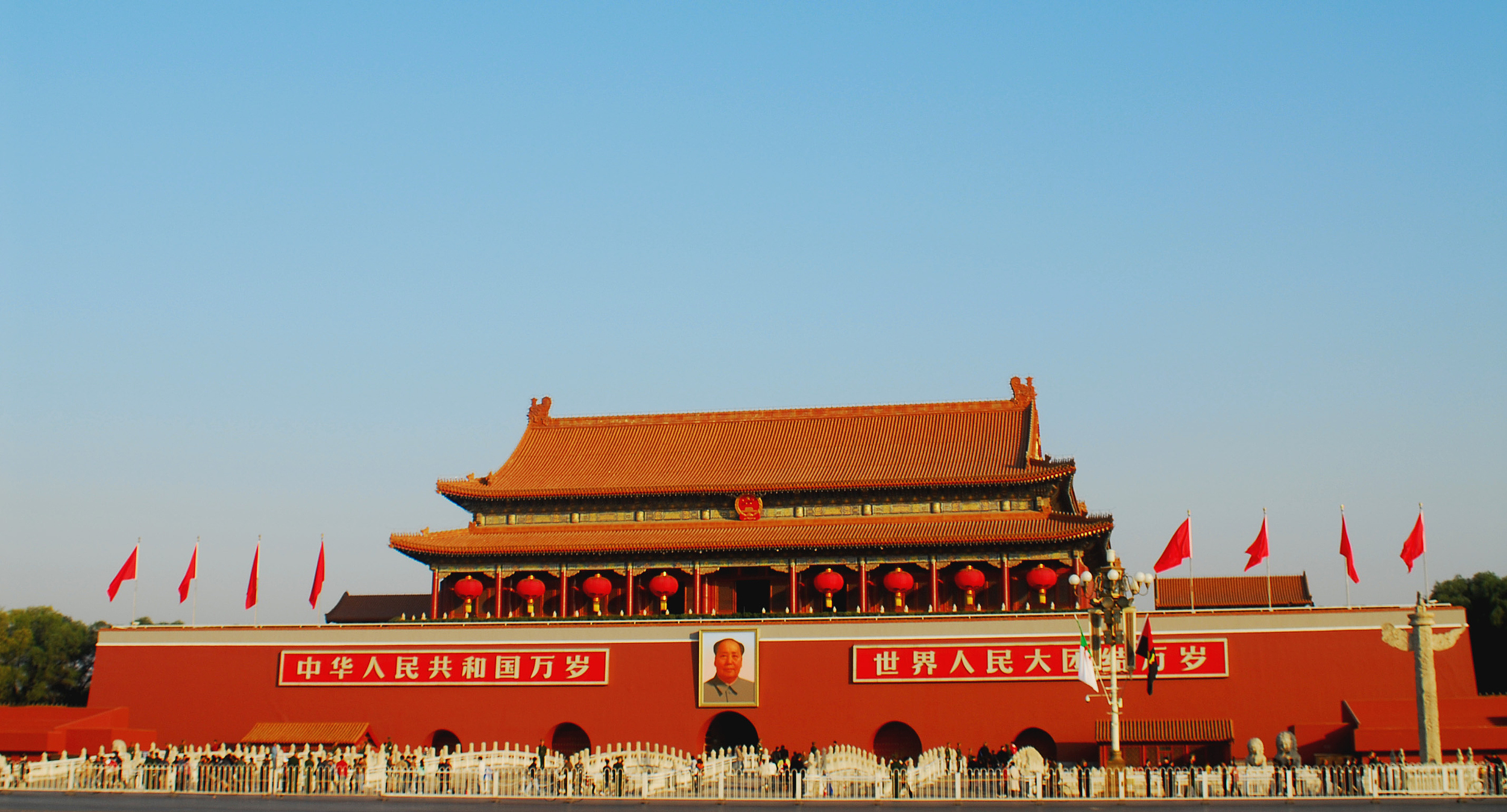
Fun fact — the name “Tian’anmen” literally means “Gate of Heavenly Peace.” It refers to the iconic gate on the north side of the square that once served as the entrance to the imperial Forbidden City.
Directly to the north of the square stands the famous Tian’anmen Gate, which leads into the Forbidden City – making it easy to visit both in one trip. On the opposite end, the historic Zhengyangmen (Front Gate) marks the start of the lively Qianmen Street pedestrian area. Thanks to this proximity, Tiananmen Square often serves as the starting or ending point for exploring Beijing’s historic city center.