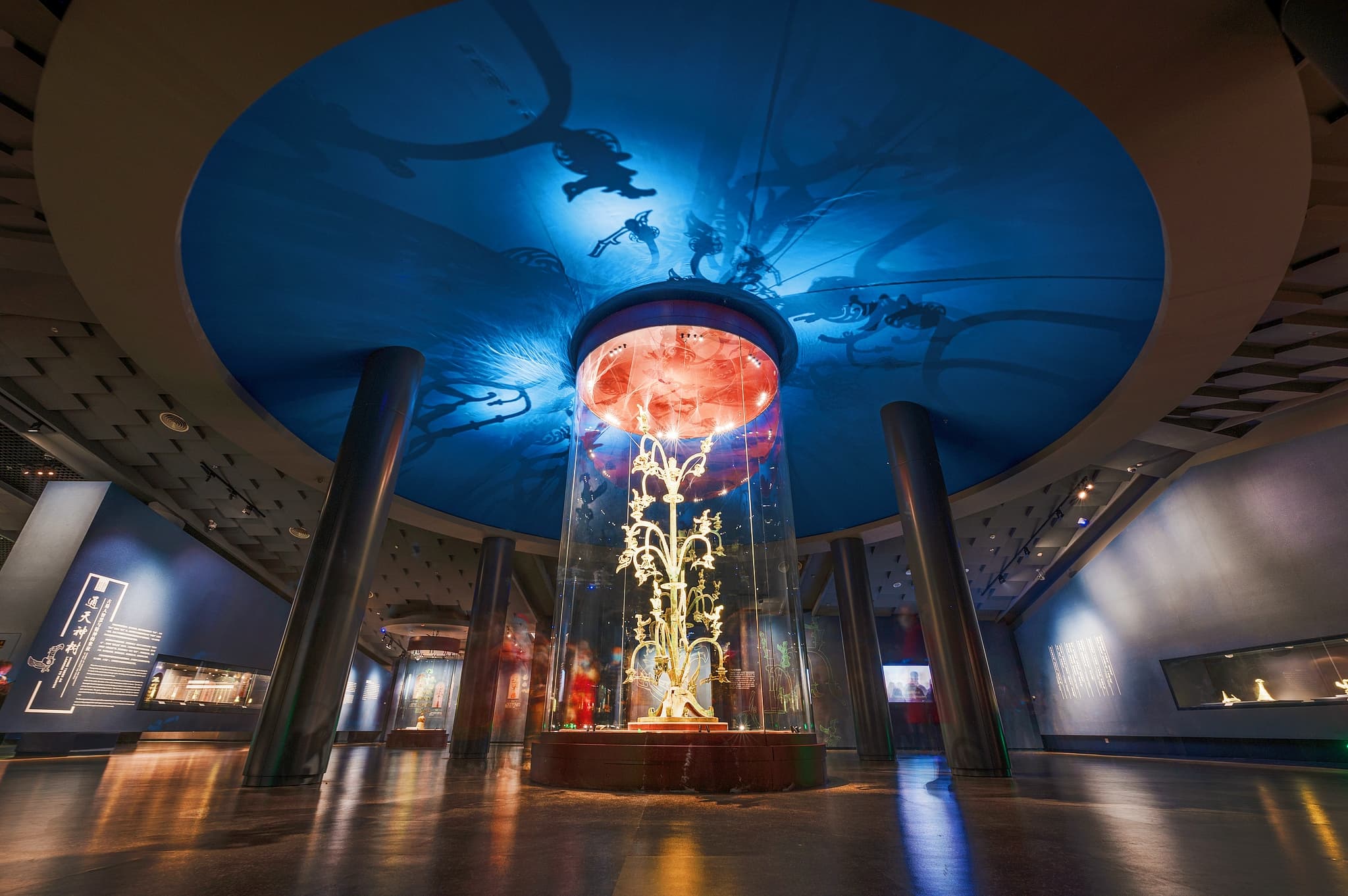
The Sanxingdui Museum is a world-renowned institution dedicated to preserving and exhibiting the artifacts of the ancient Sanxingdui culture, a mysterious civilization that flourished in the Sichuan Basin over 3,000 years ago. Its collection, particularly the bronze masks, towering figures, and sacred trees, stands out for its unique aesthetic and advanced craftsmanship, offering a glimpse into a society distinct from the contemporaneous Central Plains cultures of China. The museum's significance lies in its ability to challenge conventional understandings of early Chinese history and inspire endless fascination about its origins and disappearance.
Visitors consistently praise the museum for the profound impact of its exhibits, often using words like 'shocking,' 'awe-inspiring,' and 'mysterious.' Many reviewers highlight specific artifacts such as the bronze sacred tree, the large standing bronze figure, and the distinctive bronze masks with their exaggerated features, noting their strong visual impact and difference from other Chinese cultural relics. The newly opened museum, expanded in July 2023, is frequently mentioned for its improved exhibition content and layout, making the visit more enriching and less tiring. Several visitors recommend watching documentaries or reading about Sanxingdui beforehand to enhance the experience, as this context deepens the appreciation for the artifacts' historical and cultural significance.
To make the most of your visit, plan for at least 3-5 hours, with some suggesting a full morning or afternoon. Arriving early on weekdays is recommended to avoid crowds, though the museum can still be busy. Many reviewers strongly advise hiring a professional guide or joining a small group tour for interpretation, as the historical context and intricate details of the artifacts are best understood with expert explanations. Guides can be arranged on-site, with small groups often forming for a cost-effective shared experience. Consider bringing children who are at least fifth or sixth graders, as younger children might find the historical depth less engaging. The museum is accessible from Guanghan North Station by a short taxi ride. While there are dining options, some visitors note that food quality in the immediate vicinity can be average, so planning meals accordingly is advisable.
A common observation is the lack of written records from the Sanxingdui civilization, which contributes to its mystery but can also leave visitors wanting more definitive answers. While the museum does an excellent job presenting the artifacts, the absence of textual context means that interpretations are often based on archaeological inference. Mitigating this involves engaging with a knowledgeable guide or doing prior research, which can help bridge the gap and provide a richer understanding of this enigmatic culture.