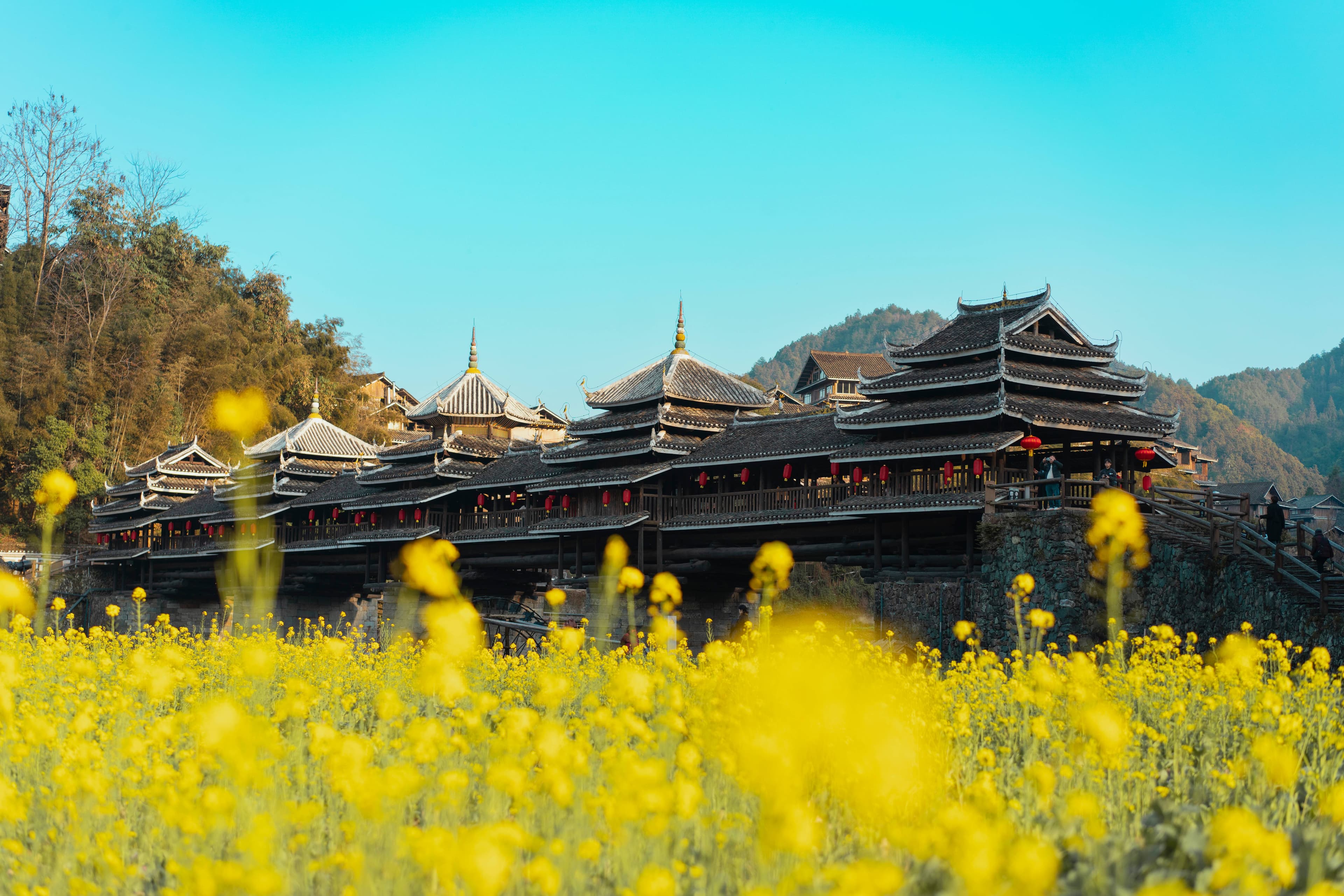
Chengyang Bazhai Scenic Village is a sprawling complex of eight traditional Dong ethnic villages, renowned for its distinctive wooden architecture, particularly the iconic Wind and Rain Bridges and majestic drum towers. It serves as a living museum of Dong culture, offering visitors an authentic glimpse into their traditions, daily life, and artistic expressions. The village is considered a national 5A scenic area and a key cultural relic protection unit, highlighting its immense historical and cultural significance.
Visitors consistently praise the village's beautiful scenery, often describing it as picturesque with lush greenery and traditional stilt houses. Many highlight the immersive cultural experiences, such as the Hundred Family Banquet, traditional Dong singing and dancing performances, and the opportunity to interact with hospitable locals. The unique wooden architecture, especially the intricate Wind and Rain Bridges and the imposing drum towers, is a major draw, with many finding them impressive and historically significant. Reviewers also appreciate the relatively uncommercialized atmosphere compared to other ethnic minority scenic spots, noting that many locals still reside within the villages.
To make the most of your visit, plan for 3-5 hours, though some suggest staying overnight in a guesthouse within the scenic area for a deeper cultural immersion. Arriving in the afternoon allows for enjoying the daytime scenery and staying for the evening performances and night views. Transportation to the village is often by shuttle bus from Sanjiang County, as private cars may not be allowed inside the core scenic area. Some reviewers recommend booking tickets online in advance for potential discounts, and those from Guangdong may receive a 50% discount with their ID. Don't miss trying local delicacies like bacon, glutinous rice, and Dongjia oil tea, and consider participating in the Hundred Family Banquet for a truly unique experience (advance reservation often required).
A common complaint is the potential for overcrowding, especially during peak seasons like Chinese New Year, which can lead to long waits for shuttle buses and a less tranquil experience. Some visitors also noted that while generally uncommercialized, a few locals might unexpectedly charge for certain interactions. To mitigate these issues, consider visiting during off-peak times or early mornings. Be aware that the village is quite large, requiring a fair amount of walking, so comfortable shoes are essential. While generally praised for its authenticity, some felt the entrance fee was a bit high.