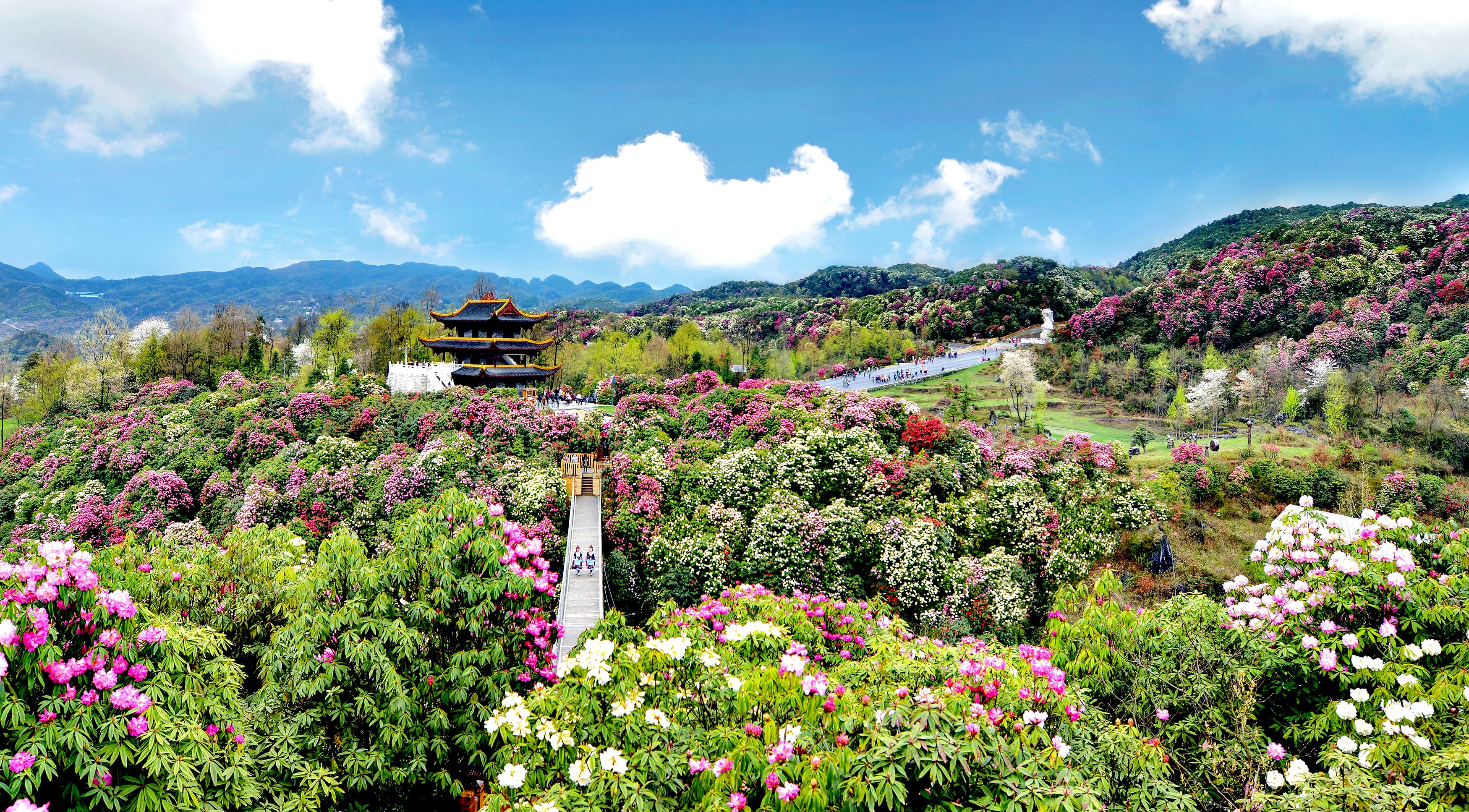
The Hundreds of Miles of Azaleas, also known as Baili Rhododendron Scenic Area, is a national 5A-level tourist attraction in Guizhou Province, renowned as the world's largest, most diverse, and best-preserved wild rhododendron forest. Spanning over 125 square kilometers, it features 23 to 45 species of rhododendrons, creating a breathtaking "sea of flowers" that has earned it titles like "the Earth's Ribbon" and "the World's Garden." It's a significant ecological site and a cultural hub for the Yi and Miao peoples' flower festivals.
Visitors consistently highlight the unparalleled beauty of the blooming azaleas, describing the experience as "intoxicating" and "spectacular." Many recommend prioritizing the Jinpo Scenic Area, often described as more vibrant and better for photography than Pudi, especially for its "net red Wanhua Bridge." Reviewers praise the thoughtful shuttle bus service within the park, noting that queues are manageable even during holidays, and the use of facial recognition for re-entry and bus rides streamlines the process. The staff, particularly at the West Gate Visitor Center, also receive commendations for their helpfulness.
To make the most of your visit, timing is crucial: the peak blooming season is generally from mid-March to mid-April, with some years seeing variations due to weather. Arriving too early or too late can result in seeing very few flowers. It's recommended to allocate 4-6 hours, or even a full day, to explore both Jinpo and Pudi. Wear comfortable shoes as there is a lot of walking, even with shuttle buses. For accommodation, be aware that quality options are limited, and public transportation outside the park can be challenging. Consider parking in the underground lot if driving, as private lots can be more expensive. Food options within the scenic area are available and generally not overpriced.
A common complaint revolves around the supporting infrastructure outside the scenic area, including limited quality accommodation, poor public transportation (Didi and taxis are scarce), and unclear road signs leading to the park. Some visitors have also reported chaotic management and poor service attitudes from staff in previous years, though more recent reviews suggest improvements. To mitigate these issues, plan your transportation and accommodation well in advance, and verify the bloom status before traveling, especially if coming from afar. Avoid buying sightseeing bus tickets online, as this can lead to confusion regarding pick-up locations; it's often better to purchase them on-site.