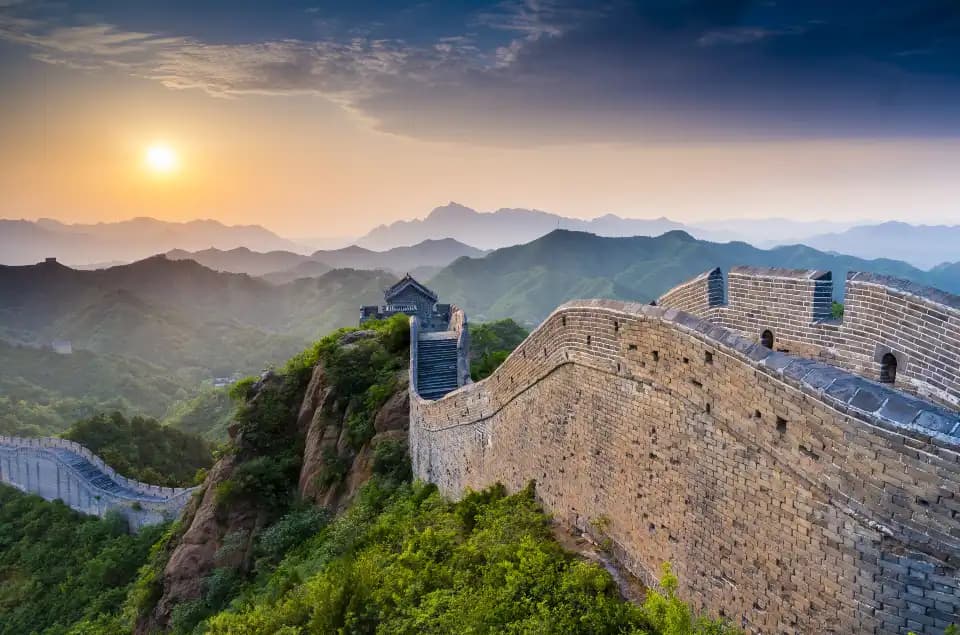
Jinshanling lies in Luanping County, Hebei, northeast of Beijing. Here the Great Wall follows the ridgeline, dropping into saddles before climbing towards another watchtower. Its appeal comes from the contrast between restored stretches, weathered brickwork and long views across neighbouring mountains. Visitors often choose it over busier sections specifically for walking and photography. The route itself is the attraction: there are plenty of changing perspectives, so stopping after a photograph at the first tower misses much of the experience.
Reviews repeatedly praise the space and relatively light crowds, particularly beyond the first towers where some groups turn back. Do not expect the entire wall to be empty: convenient access points and popular viewpoints still attract visitors. Older accounts and visits in 2026 agree on the central trade-off: the views reward the journey, while steep stairs quickly use up energy. The next tower may look close, yet reaching it can mean descending and climbing again; map distances alone give a poor impression of the effort involved.
Allow 3–5 hours on site and decide where you will finish before setting off. Walk a few towers and retrace your steps, or arrange pickup at the East Gate if that route is open. The shuttle from the parking area and the cable car serve different purposes: after the shuttle there is still an uphill walk to the wall. The cable car reduces the climb but does not remove the stairs along the ridge. Check its operation before travelling; with children or limited stamina, choose a shorter walk and keep energy for the descent.
Visitors commonly report 2–3 hours each way from Beijing by car or tour bus, with traffic sometimes lengthening the return. Agree on the meeting point, departure time and whether admission, shuttle rides and the cable car are included in your booking. Bring water, snacks, shoes with good grip and protection from sun and wind. The exposed wall gets hot in summer, while rain or snow can make steps slippery. A flexible itinerary is more useful than trying to complete a planned number of towers regardless of the conditions.
Morning light, autumn foliage and sunset often feature among visitors’ highlights, but photography plans must fit the closing time of your chosen exit. The East Gate admits visitors for fewer hours than the main entrance, and individual towers close before the whole site. Stay on the permitted route and do not assume you can continue to Simatai without checking access. The recurring disappointments are an underestimated climb, separate transport charges and rushing back to a bus. A clear route and time buffer help; a transfer booking alone is not an admission ticket.