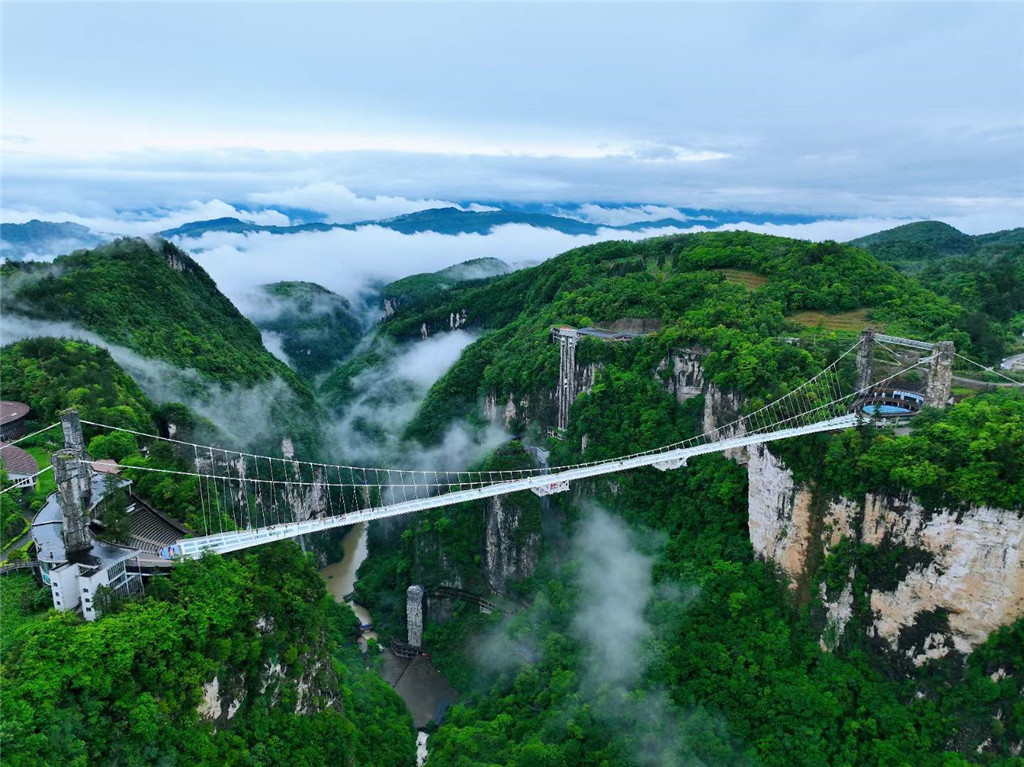
Overview
The Zhangjiajie Glass Bridge, opened in 2016, is an engineering marvel and the world's longest and highest glass-bottom bridge. Spanning 430 meters in length and 6 meters in width, it hangs suspended 300 meters above the Zhangjiajie Grand Canyon floor. This transparent bridge connects two mountain cliffs in China's Hunan Province, offering visitors a unique opportunity to walk on air while enjoying panoramic views of one of China's most spectacular natural landscapes.
Visitor Experience
The bridge experience begins with visitors putting on special shoe covers to protect the glass surface from scratches. While the bridge can induce vertigo and anxiety in those afraid of heights, many visitors find it less scary than expected. The glass panels have metal sections along the edges for those who prefer not to walk directly on transparent surfaces. The main thrill comes from looking down through the glass at the canyon floor hundreds of meters below, though visibility depends heavily on weather conditions.
Activities and Attractions
Beyond the bridge itself, the complex offers multiple adventure activities. The bungee jump from the bridge is the world's highest bungee jumping base, costing approximately ¥2000. The zipline (flying fox) carries visitors across the canyon at 300 meters height. Additional attractions include VR experiences simulating hot air balloon rides, slides that descend to the canyon floor, and boat rides along the river at the bottom. Three elevators provide transportation between different levels, though some visitors report confusion about whether these require separate tickets.
Practical Information
The experience typically takes 3-4 hours to complete fully. Visitors should arrive early to avoid crowds, especially during peak seasons and Chinese holidays. Weather significantly impacts the experience - mornings generally offer better visibility than afternoons, and foggy or rainy conditions can obscure views entirely. The complex includes food courts, cafes, and restrooms at the bridge's end and along the canyon walking paths. Visitors should be prepared for extensive walking and numerous stairs, though elevators provide alternatives for some sections.