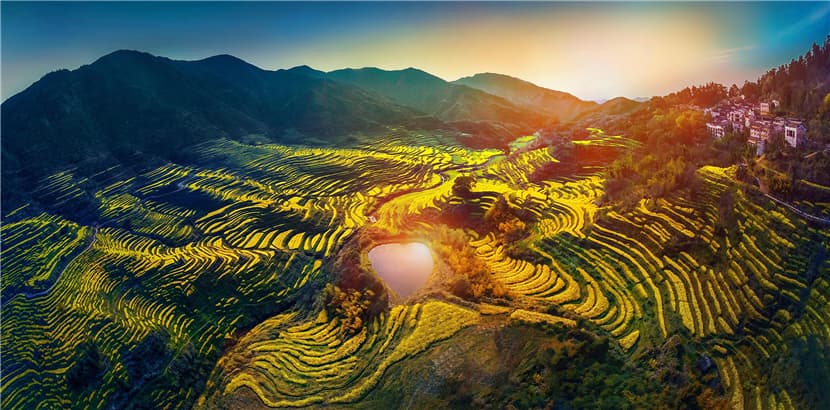
Wuyuan Huangling is an ancient village perched on a cliff, renowned for its distinctive Huizhou-style architecture and the iconic 'autumn drying' (晒秋) tradition. This practice, where villagers dry colorful crops like peppers, corn, and chrysanthemums on their rooftops, has transformed the village into a living canvas and a significant cultural landmark. Beyond the autumn spectacle, Huangling is celebrated for its vast terraced fields, which burst into golden rapeseed flowers in spring, and its misty, picturesque landscapes that evoke traditional Chinese ink paintings.
Visitors consistently highlight the village's exceptional beauty, often describing it as a 'world fairyland' or a 'paradise on earth'. Many are captivated by the well-preserved Hui-style buildings, with their white walls and black tiles, and the unique experience of seeing crops drying in vibrant displays. Reviewers frequently mention the stunning seasonal transformations, from the spring rapeseed blossoms to the colorful autumn foliage and drying crops. The scenic area is praised for being very clean and well-maintained, with organized facilities and a warm, welcoming atmosphere from the local people.
To make the most of your visit, consider staying overnight within the scenic area or in a nearby guesthouse; several reviewers recommend this for experiencing the village's serene mornings and beautiful night views. Arriving early in the morning is a common tip to avoid crowds, especially during peak seasons like National Day holidays, and to capture the misty, ethereal atmosphere. The cable car is the primary access point for most visitors, and while some find the ticket prices a bit high, many agree the experience is worth the cost. Don't rush; allocate at least half a day, or even a full day, to explore the various viewpoints, ancient lanes, and Huaxi Water Street. For photography enthusiasts, there are designated camera positions, particularly during the autumn drying season.
A common complaint among visitors, particularly during holidays, is the large crowds, which can detract from the experience. To mitigate this, plan your visit during off-peak times if possible, or arrive very early in the morning. Some also note the commercialization of the area; however, many reviewers feel that the preservation of the original buildings and cultural traditions is still evident and well-managed, making it a 'mature and standardized' attraction despite its commercial aspects.