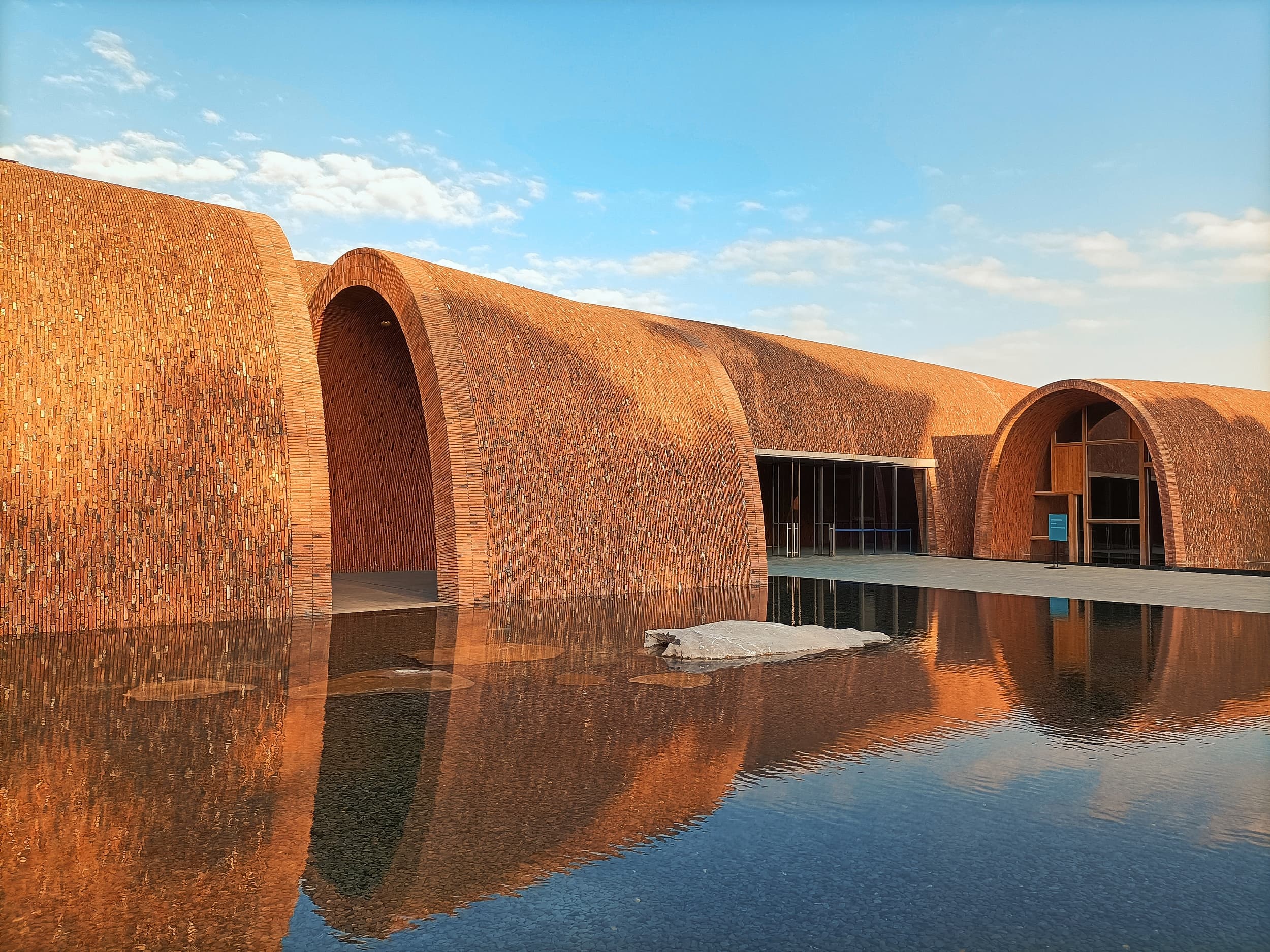
The Jingdezhen Imperial Kiln Museum stands as a testament to Jingdezhen's unparalleled legacy as the 'Porcelain Capital.' It showcases the significant ceramic archaeological achievements from the Imperial Kiln Factory, which supplied porcelain to 27 emperors across the Yuan, Ming, and Qing dynasties. The museum's design, featuring multiple curved arch structures and red brick walls, evokes the form of traditional kilns, creating a deeply atmospheric and historically resonant experience.
Visitors consistently laud the museum's distinctive architecture, often describing it as 'breathtaking' and 'Instagram-worthy.' Many highlight the interplay of the red brick domes with water reflections and the sky, making it a popular spot for photography. The museum is praised for its ability to blend rich history with modern design, offering a unique environment different from typical museums. Reviewers frequently recommend hiring a guide to fully grasp the detailed explanations of exhibits and the history of Jingdezhen porcelain, noting that a guided tour enriches the experience significantly. The exhibits, though sometimes consisting of fragments and repairs, are considered 'exquisite' and 'worth savoring,' providing insight into the 'pinnacle of porcelain culture.'
To make the most of your visit, consider going on a sunny day to appreciate the architecture, but also plan for a night visit as many reviewers find it 'more beautiful at night' with its illuminated industrial aesthetic. The museum is located within the Taoyangli Scenic Area. While the museum itself is free, you typically need to purchase a ticket for the Taoyangli Scenic Area to access it. It is strongly advised to reserve museum tickets online in advance, especially during peak seasons like summer vacation, to control visitor flow. Many suggest entering Taoyangli after 4 p.m. to enjoy both daylight and nighttime views. Allow 2-3 hours for a thorough visit, or even longer if you plan to take many photos. Some visitors recommend exploring the surrounding Taoyangli area for dining options, as cafes and restaurants within the museum complex are limited.
A common point of confusion for visitors is the entry fee structure: while the museum itself is free, it is situated within the Taoyangli Scenic Area, which charges an entrance fee. This has led to some complaints about perceived 'forced purchases.' To mitigate this, ensure you understand that the Taoyangli ticket grants access to the area containing the museum. Additionally, during busy periods, the museum can become crowded, particularly with people taking photos, which some find disruptive to the viewing experience. Arriving early or later in the evening might help avoid the largest crowds.