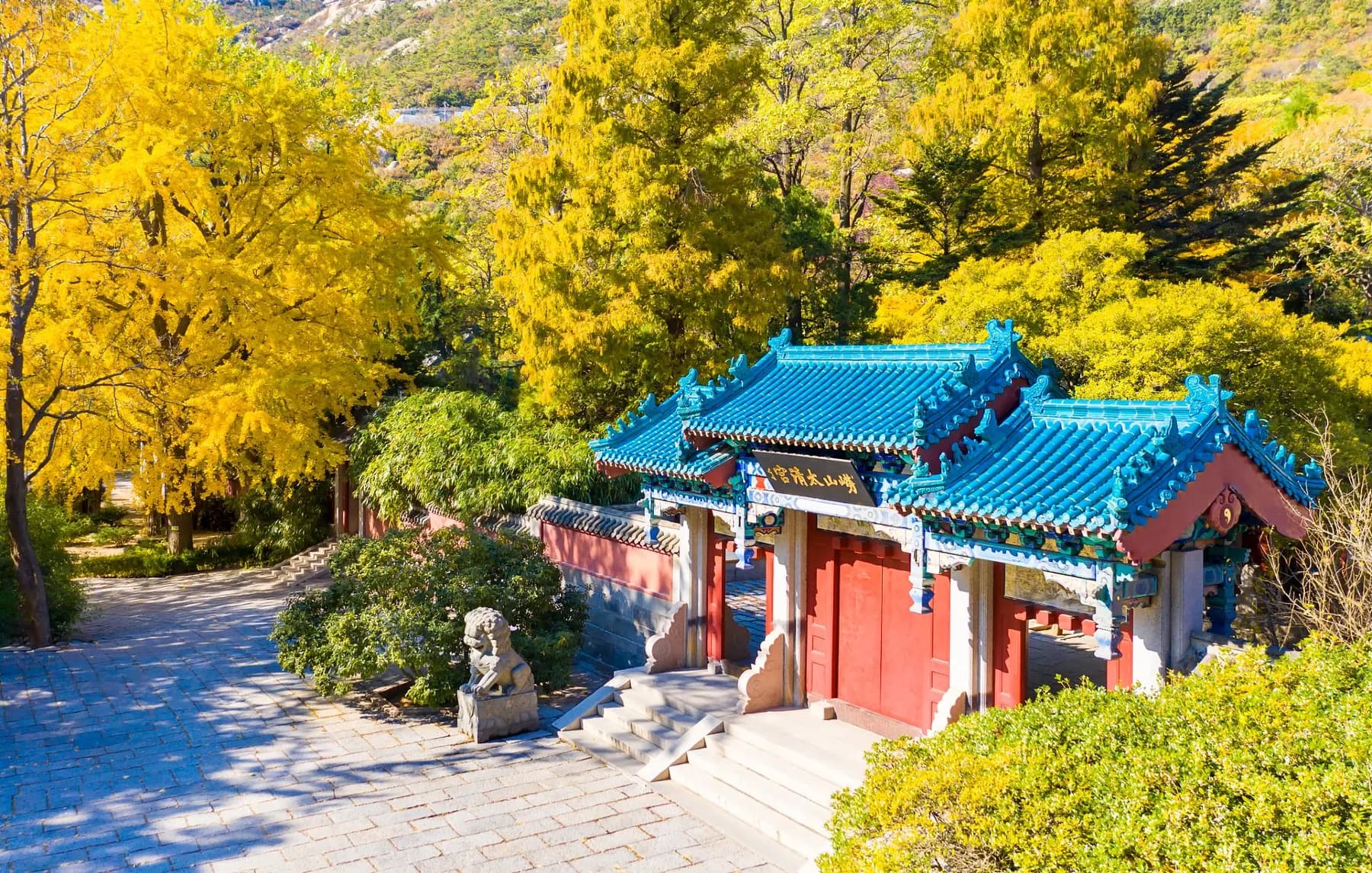
Taiqing Palace (Palace of Supreme Purity, also called Xiaqing Palace) lies on the eastern slope of Laoshan, below Pantao Peak, among pine groves and granite boulders. Taoists consider it one of the most important monasteries in China, and it is the oldest and largest Taoist temple in Qingdao. The complex covers about 30,000 square metres and keeps some Song-dynasty-style buildings, which are rare in today's Taoist monasteries. Its most visible landmark is the 36-metre statue of Laozi on a 28-metre pedestal. The statue faces the sea, and the philosopher's image is based on a painting by the Tang master Wu Daozi.
Visitors most often praise the following:
- The ancient trees, one of them said to be over 2,200 years old.
- The quiet setting.
- The sea views from the gate and the exit.
Inside the temple you will find:
- The Sanguan Hall (Three Officials) and the Sanqing Hall.
- The Shenshui Spring in front of the Sanqing Hall.
- Steles linked to Kublai and Genghis Khan set into the wall of the Three Emperors' Hall.
- An inscription by Kang Youwei on a boulder behind the palace.
- The wall associated with Pu Songling's story about the Taoist of Laoshan.
Several visitors say a guide or audio explanation makes a real difference, otherwise many of the stories are missed.
Getting there. Without a car or taxi, getting here is not simple. You need to reach a Laoshan visitor centre, such as the Dahedong service centre, and transfer to the scenic-area bus that runs directly to Taiqing Palace. One older review mentions 40 yuan per person for that bus. Another route described by visitors is bus 618 from Huayan Temple to the pass, then a walk up the steps to Taiqing Square.
Tickets and timing. Visitors mention an entrance fee of around 27 yuan. Hours are 7:30–17:30, with last entry at 17:00. Allow 1.5–3 hours for the palace and the statue, and more if you combine it with other Laoshan sights. Come in the morning, wear comfortable shoes for steps, and choose a clear day for the panoramas. Autumn is singled out as the most beautiful season.
Common complaints. Most concern logistics: the long trip from central Qingdao and the transfers inside the Laoshan scenic area. Some visitors found cable cars or upper sections closed. Check the status before you go, and start early so you are not rushing before last admission.