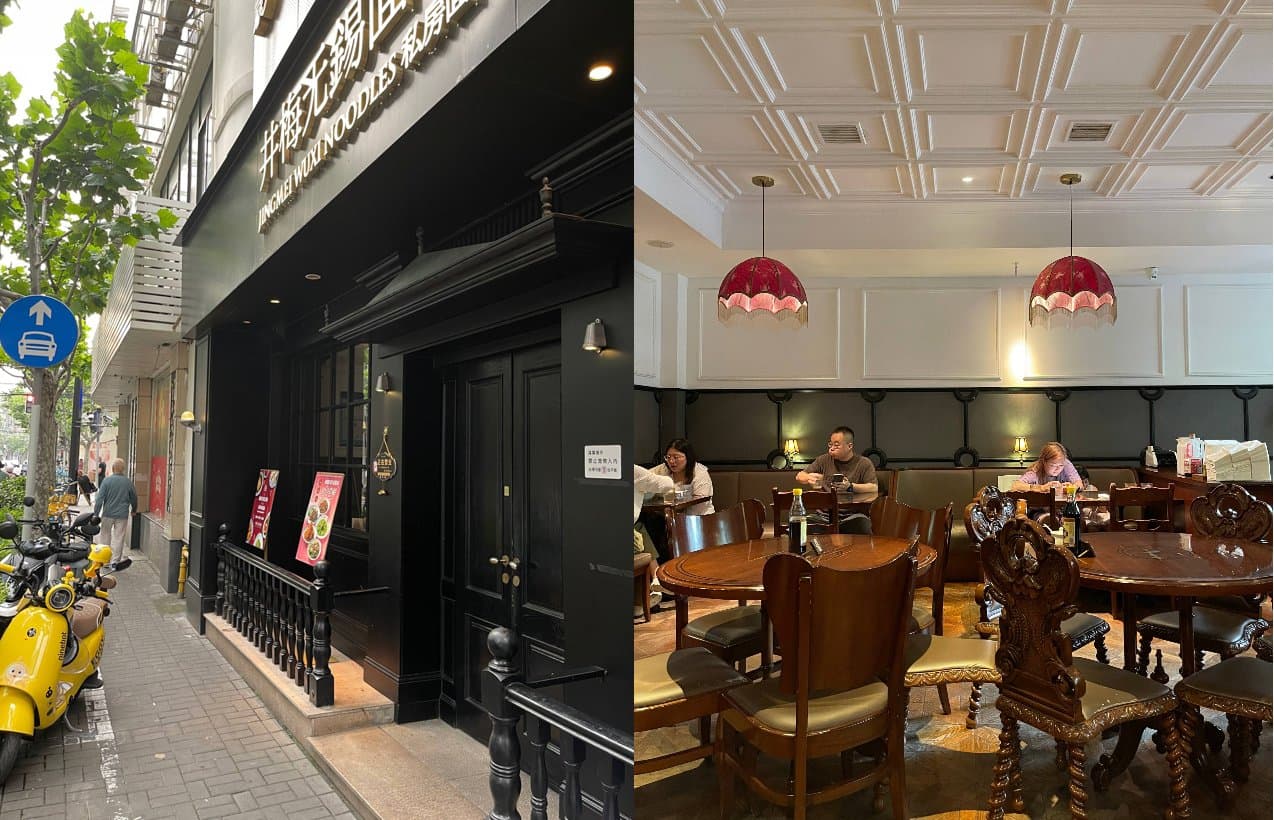

Shanghai is currently obsessed with “old” places — restaurants with slightly worn interiors, heavy wooden chairs, and food that hasn’t been redesigned for social media. Jing Mei Wuxi is exactly that kind of spot. A tiny noodle shop on Yanping Road that locals both adore and seem slightly protective of.
Judging by the reviews, people don’t come here for “the best noodles in Shanghai.” They come for something much more specific: old Jiangnan flavors, sweet soy sauce, oily noodles, meat so tender it falls apart under your chopsticks, and that deeply comforting feeling of a place that looks a little outdated — in the best possible way.
The signature dish is the noodles with braised pork ribs. Nearly every other review describes them the same way: sticky sweet-savory sauce, springy noodles, and a massive slab of pork that tastes like it’s been cooking all day. For some people the flavor is almost too sweet — Wuxi cuisine is famously sugar-heavy — but most reviewers end up saying some version of: “Yes, it’s sweet, and yes, I couldn’t stop eating it.”
The soup dumplings are the other must-order item. They’re also the most photographed dish: thin wrappers, lots of broth inside, glossy fillings, the whole classic Shanghai comfort-food fantasy. Some reviewers note that the version here feels slightly adapted for local Shanghai tastes and less intense than what you’d get in Wuxi itself, but nobody seems particularly disappointed.
A huge part of the appeal is the atmosphere. People constantly describe the restaurant as “small,” “old-fashioned,” or even “a little shabby” — always affectionately. This isn’t polished comfort food or a trendy design-forward noodle bar. It feels like a neighborhood restaurant that somehow survived unchanged while the city around it modernized.
Vintage porcelain bowls, cramped seating, noisy tables, queues outside the door — all of it seems to add to the charm rather than subtract from it.
One surprise from the reviews is how often people rave about the desserts and side dishes. Salted egg yolk buns and red bean sweets show up again and again, usually with the tone of someone who came for noodles and accidentally found their favorite dish of the night.
There isn’t much real criticism. Most complaints are about the lines, the tight space, or the sweetness level if you’re not used to this regional style of cooking. But even the negative reviews tend to sound more like: “Yes, it’s sweet, crowded, and noisy — that’s kind of the point.”
In the end, Jing Mei Wuxi comes across as a very rare kind of Shanghai restaurant: a place that has already become fashionable, yet still somehow feels like a local secret.