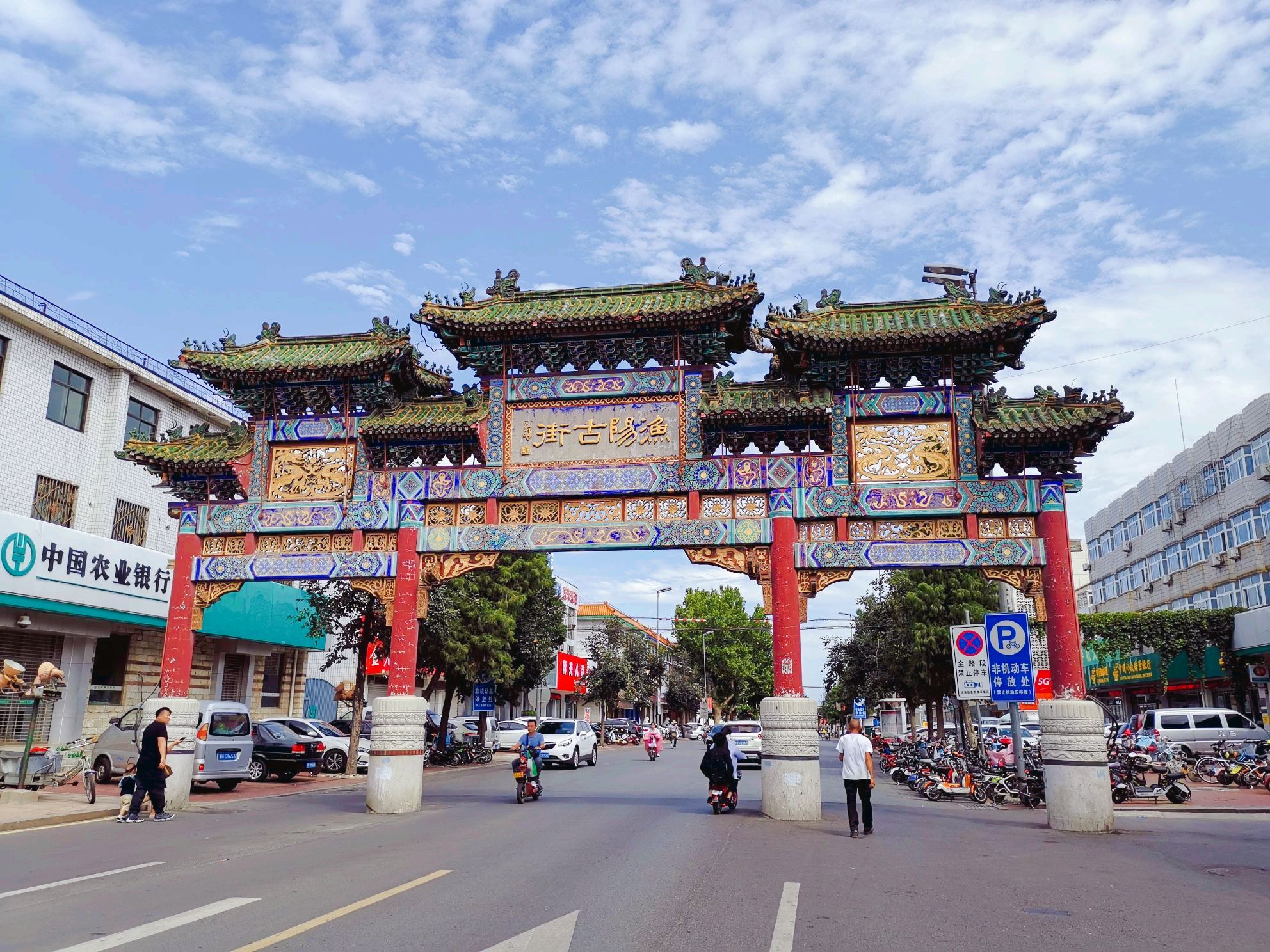
How a 1,000-year-old Tang trade hub became a lively heritage street 🇨🇳
Walking through the ornate paifang gate into Yuyang Ancient Street, visitors feel like they’ve stepped back in time. Travelers describe climbing the old Drum Tower and gazing out over the winding bluestone roads and traditional gray-tiled rooftops below. The wooden stairs up the tower “creak as if telling stories of the past,” and wind chimes on the eaves jingle softly in the breeze:. It’s easy to imagine the bustle of the former marketplace centuries ago. The 450-meter pedestrian street today is lined with restored late-Qing dynasty style buildings – some with high gabled roofs and carved beams, others simple brick shopfronts – recreating the atmosphere of a classic northern Chinese town.
Jizhou (formerly Jixian) has been an important town since ancient times. It was first established as a city in the Han dynasty, and by the Tang era it was the seat of 蓟州 (Jizhou), a strategic prefecture on the empire’s northern frontier. The Ming dynasty brought major fortifications: in 1371 (Hongwu reign) the rammed-earth city walls were rebuilt in brick, with three gated entrances (East, West, South) and a mountain to the north as a natural defense. The main thoroughfare ran about three li (~1.5 km) between the East and West gates. Today’s Yuyang Ancient Street occupies the western section of that old road, beginning near the Drum Tower in the east and ending at a remnant of the old city wall in the west. After recent renovations, the street has regained an “original” old-town look, complete with period-style lamps and a centuries-old locust tree providing shade.
Historic landmarks are clustered in and around the ancient street. The Yuyang Drum Tower (渔阳鼓楼) stands at the eastern end, marking the heart of the old city. Visitors can climb this three-story Ming-era tower for a panorama of the streets below. Just opposite the Drum Tower is the Dule Temple (独乐寺) – one of only three remaining Liao Dynasty (10th century) wooden temples in China. It features the towering Guanyin Pavilion with a 16-meter Buddha statue and intricate timber architecture that has survived centuries. Next door, the White Pagoda of Baita Temple (白塔寺), first built in 1058, rises 30 meters high in gleaming white brick, combining pavilion, multi-eaved and stupa elements in its design. On the street itself you’ll also find a Qing-era Confucian Temple and a Luban Temple (dedicated to the patron saint of builders), testifying to Jizhou’s long cultural and religious heritage. Together, these sites make the ancient town a kind of open-air museum of architecture and history.
One of the biggest draws of the “ancient merchant town” is the chance to savor traditional street foods and snacks. Yuyang Ancient Street is lined with vendors and old-fashioned eateries serving Jizhou’s local specialties. Travelers say you “must go to Yuyang Ancient Street to eat all the snacks”: – especially the beloved doupi juan youbing (豆片卷油饼), a thin tofu wrap rolled around a crispy fried dough stick. Other regional favorites include Jizhou lamb soup, sticky rice desserts like lǘ dǎ gǔn (“rolling donkey”), and hot brewed tea soup ladled from a huge copper kettle. In the evenings, the street comes alive with red lanterns, and the aroma of barbecue fills the air as vendors grill meats on open flames. (Some visitors note that it’s quieter and smaller in scale than the tourist streets in downtown Tianjin, which many find part of the charm.) You can browse souvenir stalls for hand-cut paper art, painted gourd crafts, and other folk items while nibbling on treats – a delight for the senses.
Thanks to its rich character and convenient location, Jizhou’s ancient city has become a popular weekend getaway. Many travelers from Beijing and Tianjin refer to Jizhou as a “treasure small town” full of hidden gems. During holidays, the old streets bustle with cultural performances, markets, and light displays, bringing even more color to the historical setting. Whether you’re a history buff tracing the Tang and Liao legacy, a foodie hunting authentic northern Chinese flavors, or simply looking for a nostalgic stroll, this Tang-era merchant town offers a rewarding journey back in time.